By Kaley Clements
Niacinamide is my favorite skincare ingredient. For many reasons, niacinamide can be used for all skin types. Although it is commonly used for oil control and acne, it has several other proven benefits. According to Kreft and Wohlrab, in the Skin Pharmacol Physiol, these are the notable benefits of niacinamide for the skin:
- Anti-itch – Beneficial for skin conditions such as dermatitis.
- Antibacterial – Beneficial for reducing acne-causing bacteria.
- Anti-inflammatory – Beneficial for skin conditions such as, rosacea, acne and dermatitis.
- Reduces UV damage – Beneficial to use in addition to sunscreen to prevent aging caused by UV rays.
- Regulates oil production – Beneficial for oily skin types and dry skin types.
- Skin brightening – Beneficial for fading acne scarring and hyperpigmentation.
Niacinamide is a form of vitamin B3, which is a water-loving, essential vitamin for overall health. There is evidence in Inflammatory Res of niacinamide being a possible treatment for arthritis. What can’t niacinamide do?
Niacinamide is an “active” ingredient, meaning it works to address specific skin concerns with a noticeable effect. According to a study published in Int J Mol Sci. niacinamide works best when formulated in combination with other “brightening agents.” This is important to consider when choosing skincare products containing niacinamide. Depending on the skin condition, the formula matters. Some options are:
- Soul Apothecary Radiance Boost Serum: An affordable brightening formula ($8)
- Good Molecules 5% Niacinamide Serum with Ectoin: A hydrating formula ($8)
- Anua Niacinamide 10+ TXA 4: A potent brightening formula ($22)
- Fig. 1 Niacinamide Serum: A gentle option for sensitive skin ($36)
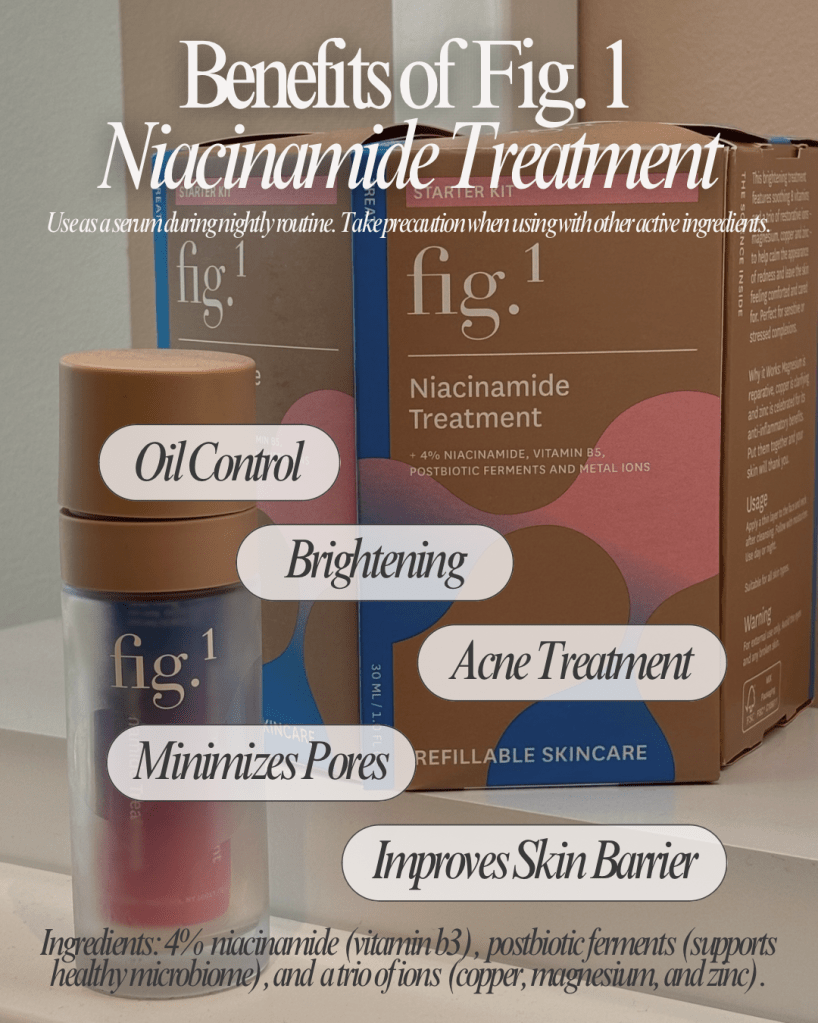
When using any active ingredient, it is important to take precaution while using other active ingredients such as, retinols and hyaluronic acid. Typically, when actives are formulated together in one product, then it is a stable product to use. However, when mixing formulas at home, the skin can become sensitized to too many active ingredients.
Remember, always wear your sunscreen.
Disclaimer: This information is for educational purposes. Please consult with a dermatologist before starting new skincare treatments, especially if you have chronic skin conditions.
 Esthi Kaley